
The Habitat Live-Work Precinct at 1 Porter Street in Byron Bay is a thoughtfully designed community where residents can live, work and recharge in one integrated space. Developed by Bayshore Development, Habitat has been over 20 years in the making, blending the spirit of “old Byron” – creativity, community and environmental respect – with modern sustainable design principles, including renewable energy, shared mobility, and hybrid live-work spaces.
Among the many elements contributing to Habitat’s sustainable and functional design is something deceptively simple: clothes drying. For this, ASSDA Member Coastal Clotheslines was engaged to supply and install more than 80 stainless steel clotheslines, delivered in four stages from 2018 through to 2025. Designed to withstand harsh coastal conditions with minimal maintenance, these clotheslines exemplify how clever design and stainless steel innovation can make everyday sustainability effortless.
Designing for compact coastal living 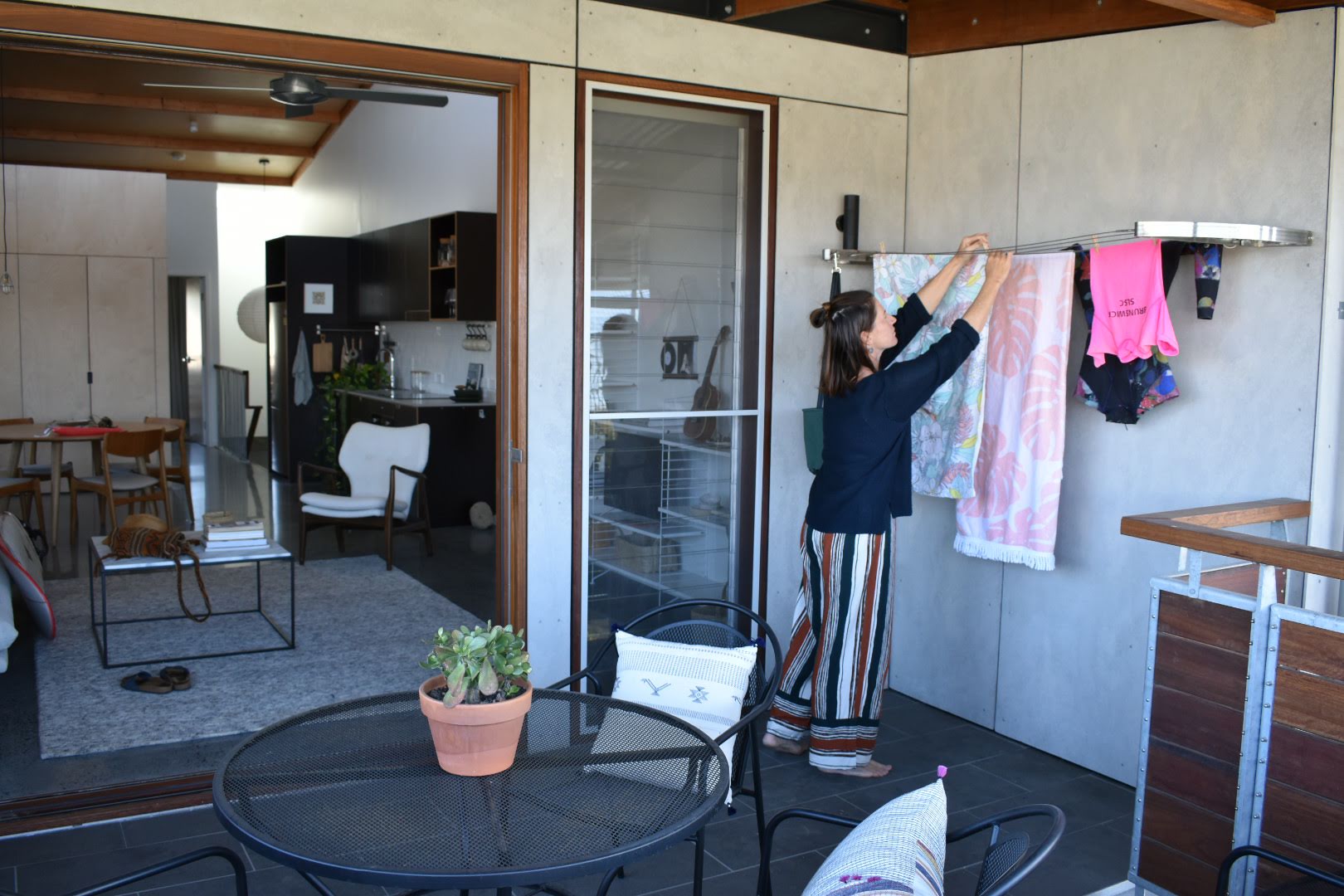
Habitat’s double-storey one- and two-bedroom terraces, designed by DFJ Architects, combine timber, steel, cement sheeting and concrete to create compact, durable living spaces. Integrating practical drying solutions in this context presented a unique design challenge.
To meet these demands, Coastal Clotheslines created a custom folding curved bracket system using stainless steel. The innovative design was refined over a 12-month period, including extensive prototyping, salt bath testing, and collaboration with architects to ensure every bracket fit perfectly in its intended space. This effort resulted in an Australian-first patent for folding curved flexing clothesline brackets, submitted in 2017.
The design leverages stainless steel’s work-hardening properties, achieving a structure that combines rigidity with flexibility – without the need for additional post-forming hardening or welding. Cold-forming the steel not only ensures strength and durability but also reduced fabrication energy.
The result is a stylish, highly functional clothesline that discreetly folds away when not in use yet provides ample space for everyday laundry. Installed on cement sheet stud walls, each 1800mm x 600mm unit accommodates up to six lines, maximising usable space in compact terraces while remaining easy to operate and maintain.
Why stainless steel was essential 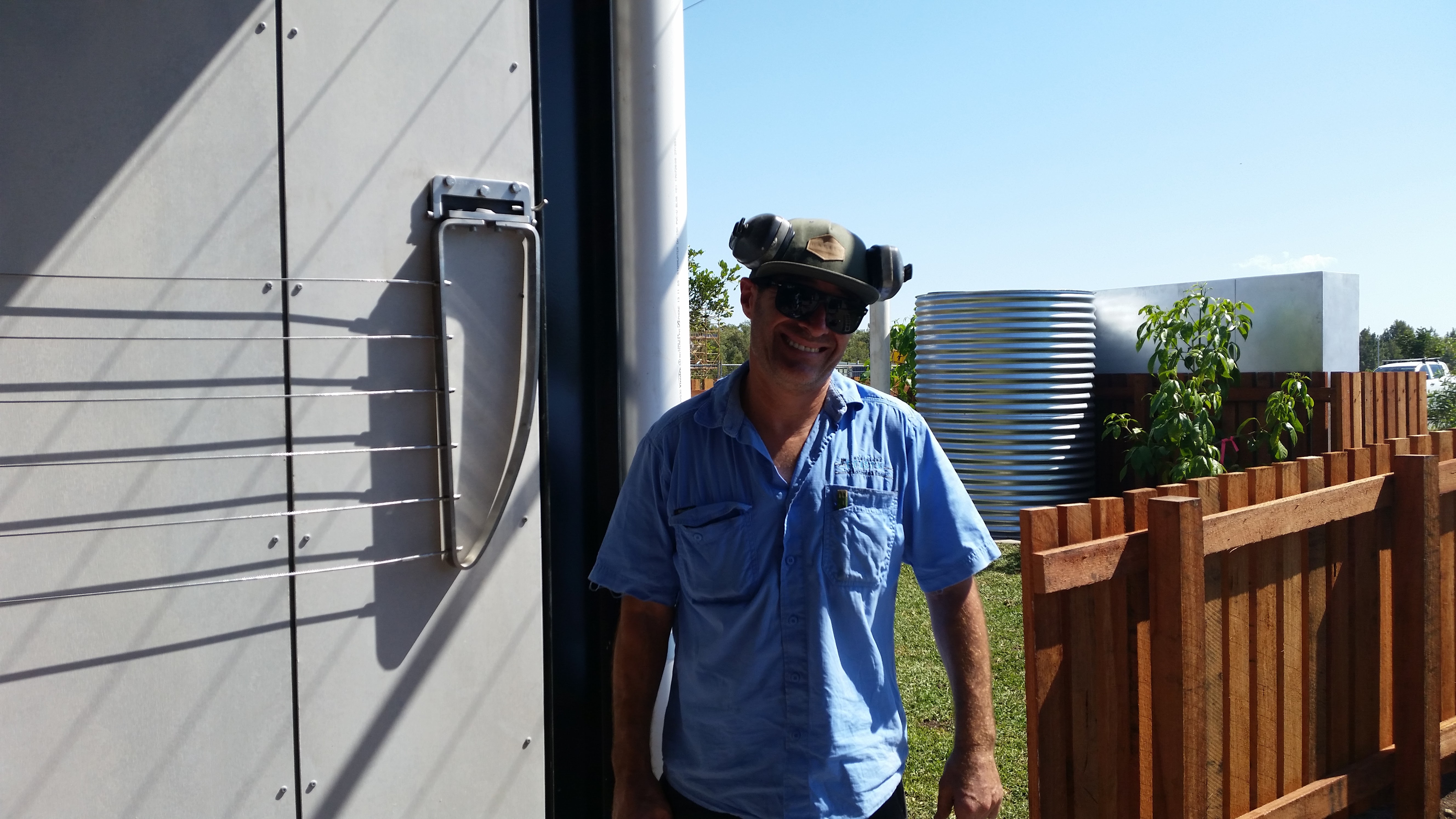
Located 700 metres from the coastline in a subtropical landscape, Habitat demanded materials that could ensure harsh marine conditions. Stainless steel was the only material capable of combining durability, low maintenance, and sustainability in this environment.
Each clothesline is hand fabricated from 8mm thick HRAP 316L stainless steel flat bar, finished to a mirror polish for long-term performance and easy cleaning. Over the eight years since the first installation, there has not been a single failure or need for maintenance, including fixings, fasteners, cables or corrosion related issues.
Collaboration across the stainless steel supply chain further strengthened the outcome. Coastal Clotheslines partnered with ASSDA Member Arcus Wire Group to source 2205 duplex stainless steel wire rope cable for the lines, while all fixings and fasteners were supplied in 316 stainless steel, ensuring consistent strength and longevity throughout the system.
Beyond performance, stainless steel supports Habitat’s passive sustainable design philosophy. The fabrication of more than 80 clotheslines produced just 11 kilograms of swarf, all recycled back into the stainless steel circularity loop. With stainless steel’s global recycling rate of approximately 95%, these clotheslines will remain part of the circular economy for decades to come.
Sustainable innovation in fabrication
Coastal Clotheslines’ workshop is 100% solar-powered, and fabrication involves zero welding, eliminating emissions and noise pollution. The company is also working with its steel supplier toward ISO 14001 certification and has begun the initial phase of GECA certification for its stainless steel product range.
Proven durability and design longevity
The Habitat Live-Work Precinct project demonstrates how careful material selection, innovative design, and stainless steel expertise can deliver lasting, sustainable infrastructure in a coastal environment. Eight years on, the clotheslines continue to perform flawlessly, reflecting both Coastal Clotheslines’ engineering precision and the sustainable durability of stainless steel.
By combining function, design, and sustainability, Coastal Clotheslines has created a solution that quietly enhances everyday life while supporting circular, low-maintenance, and resilient urban living – one clothesline at a time.
This article was featured in Australian Stainless Magazine Issue 84.
Photo credit: Coastal Clothelines.